

NTTU Faculty of Pharmacy expands research collaboration with the University of Sydney
NTTU – The Faculty of Pharmacy at Nguyen Tat Thanh University recently held a working session with the University of Sydney and the Sydney Vietnam Institute to discuss potential areas of cooperation in research and training within the health sciences. Notably, the Sydney delegation shared details of an ongoing collaboration model with Hanoi Medical University, in which the Vietnamese university provides laboratory space, facilities, and personnel, while Sydney contributes expertise, technical training, connections to international research groups, and joint development of funding proposals. Both sides discussed this model as a useful reference for developing research collaboration at NTTU’s Faculty of Pharmacy.
Attending the session, the international delegation included Assoc. Prof. Dr. Justin Beardsley, an infectious disease specialist from the University of Sydney, and Dr. Duong Nu Tra My, Head of the Microbiology Laboratory at the Sydney Vietnam Institute.
Representing Nguyen Tat Thanh University were Prof. Dr. Nguyen Van Thanh – Vice President in charge of the Health Sciences Sector and Dean of both the Faculty of Pharmacy and the Faculty of Medical Laboratory Technology – along with representatives from the Faculty of Pharmacy, the Faculty of Applied Sciences and Technology, and the Global Engagement Department.
At the meeting, NTTU representatives shared the university’s direction of strengthening cooperation with international research institutions in the health sciences. Building on this foundation, discussions focused on areas of mutual interest with the potential to develop into concrete areas of collaboration.
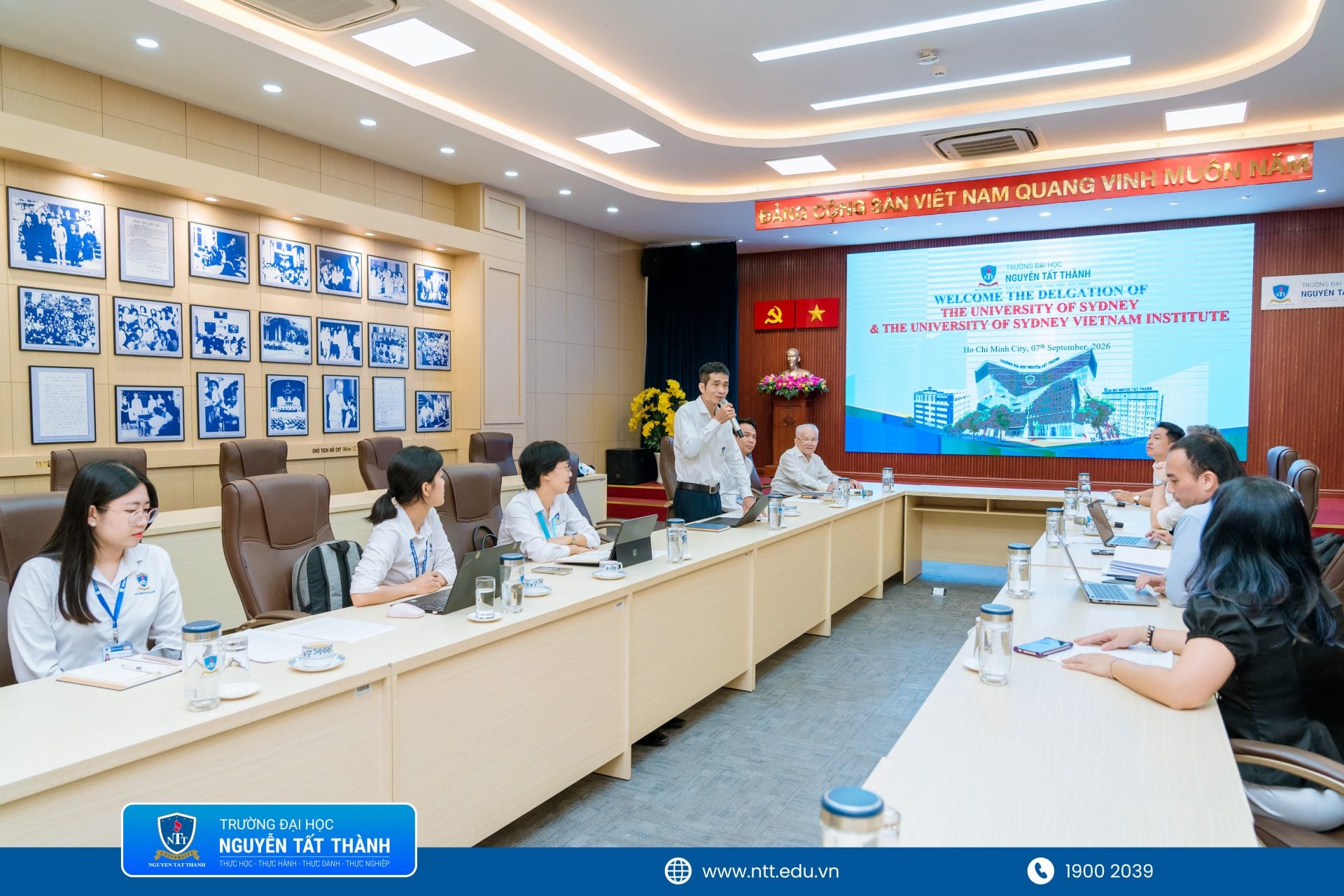
NTTU’s Faculty of Pharmacy meets with the delegation of experts from the University of Sydney and the Sydney Vietnam Institute to discuss potential research collaboration in the health sciences
From Microbiology and Antimicrobial Resistance to One Health
The technical topics discussed included microbiology, antimicrobial resistance, infectious diseases, and public health – areas that overlap with the existing expertise of NTTU’s Faculty of Pharmacy.
The Faculty of Pharmacy currently has faculty members working in microbiology, parasitology, pharmacy, and health sciences. Building on this foundation, one direction of particular interest raised at the meeting was One Health – an approach that considers human health in relation to animal health and the environment.
Taking an interdisciplinary approach to health issues creates additional room for the Faculty of Pharmacy to expand the scope of its research, particularly on issues that simultaneously involve microorganisms, infectious diseases, the environment, and public health.
During the technical discussion, the Sydney Vietnam Institute also introduced its role in Vietnam. The Institute serves as a focal point connecting University of Sydney professors and experts with universities, hospitals, and research organizations in Vietnam, helping to jointly develop ideas, build proposals, and implement applied research projects.
This approach to networking aligns with the Faculty of Pharmacy’s need to expand its research network, helping faculty members and researchers gain closer access to international expert groups.
From these initial discussions, several topics were identified for further consideration, including antimicrobial resistance, microbiology and mycology, microbial genetics, and bioinformatics analysis.
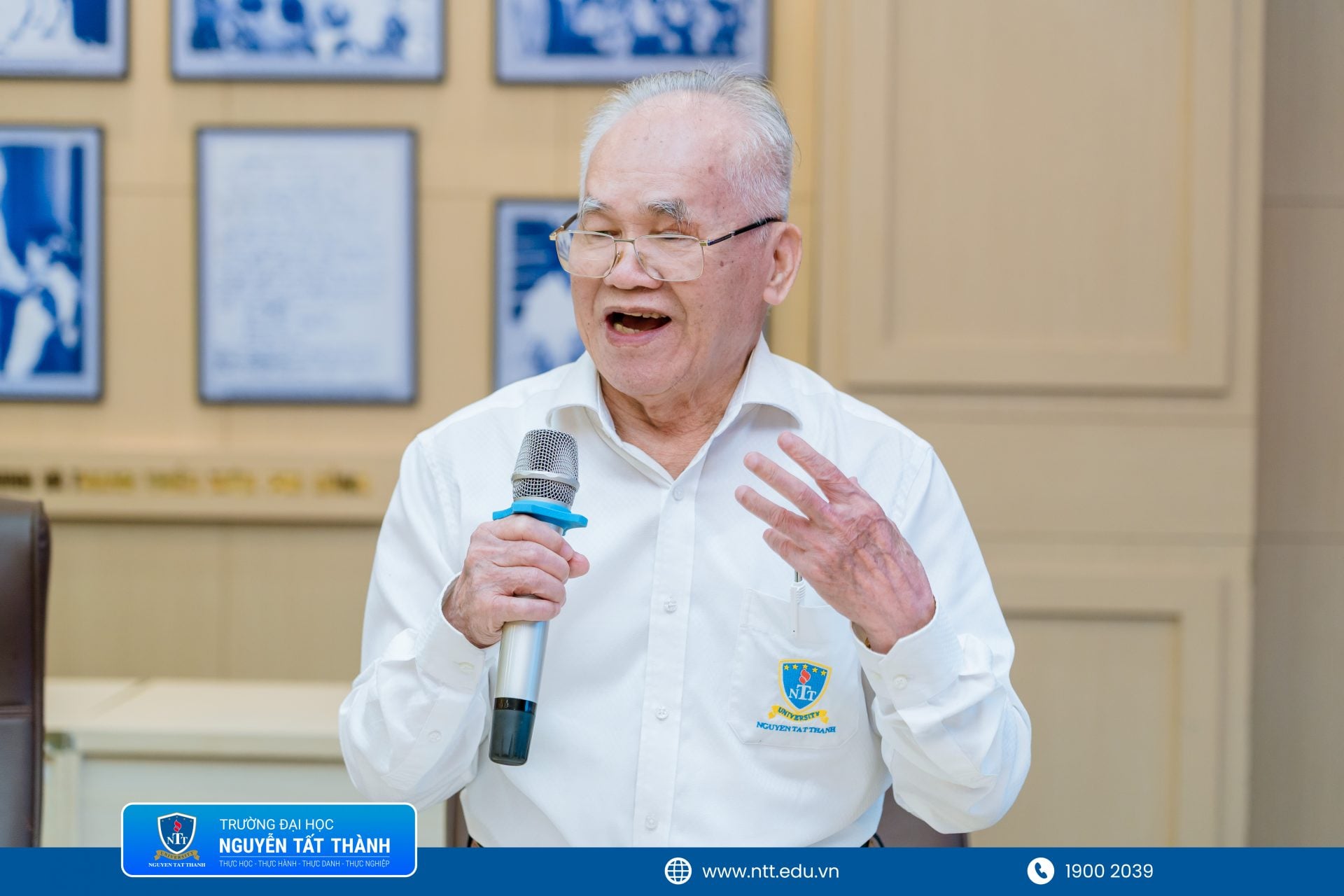
Prof. Dr. Nguyen Van Thanh, Vice President in charge of the Health Sciences Sector, discusses NTTU’s direction for expanding international research cooperation, particularly in fields aligned with the Faculty of Pharmacy’s areas of strength
Drawing on an Existing Collaborative Laboratory Model in Vietnam
One of the most concrete topics of the meeting was the possibility of developing a collaborative laboratory model between NTTU’s Faculty of Pharmacy and the Sydney side.
The delegation shared experience from the model currently being implemented with Hanoi Medical University. Under this model, the Vietnamese university provides laboratory space, facilities, and personnel, while the University of Sydney and the Sydney Vietnam Institute provide expertise, technical training, connections to international research groups, and joint development of funding proposals.
The model illustrates that research collaboration depends not only on one side’s expertise, but also on coordination between Vietnam’s infrastructure and workforce and international experts, techniques, and research networks.
Drawing on this shared experience, NTTU’s Faculty of Pharmacy is considering the possibility of gradually developing a specialized research hub suited to its current capacity. The topics proposed for initial consideration include antimicrobial resistance, microbiology and mycology, microbial genetics, and bioinformatics analysis.
If implemented, this direction of collaboration would require further clarification of conditions related to personnel, facilities, funding, intellectual property, and mechanisms for transferring research results. Both sides agreed that these matters would be addressed on a program-by-program basis rather than applied uniformly across all cooperative activities.
From Research to Faculty and Student Training
Another direction proposed at the meeting was to expand research participation opportunities for faculty members, researchers, and students in the Faculty of Pharmacy.
Under this proposed direction, the faculty’s staff could take part in international research projects, access in-depth training programs, jointly develop scientific proposals, and gain exposure to modern laboratory techniques.
For students, future collaborative programs could create additional opportunities to participate in research topics, complete theses, and gain exposure to an international research environment – a direction aligned with the goal of linking training activities with scientific research at the Faculty of Pharmacy.
Research outcomes generated through the collaboration are also expected to feed back into the training curriculum. Rather than separating research from teaching, new knowledge, techniques, and experience could be incorporated into the content delivered to students.
At the institutional level, this direction is consistent with the goal of strengthening the connection between research, training, and international cooperation within the health sciences sector. For the Faculty of Pharmacy, it represents an opportunity to expand the scope of research using existing resources while creating a stronger environment for professional development for both faculty and students.
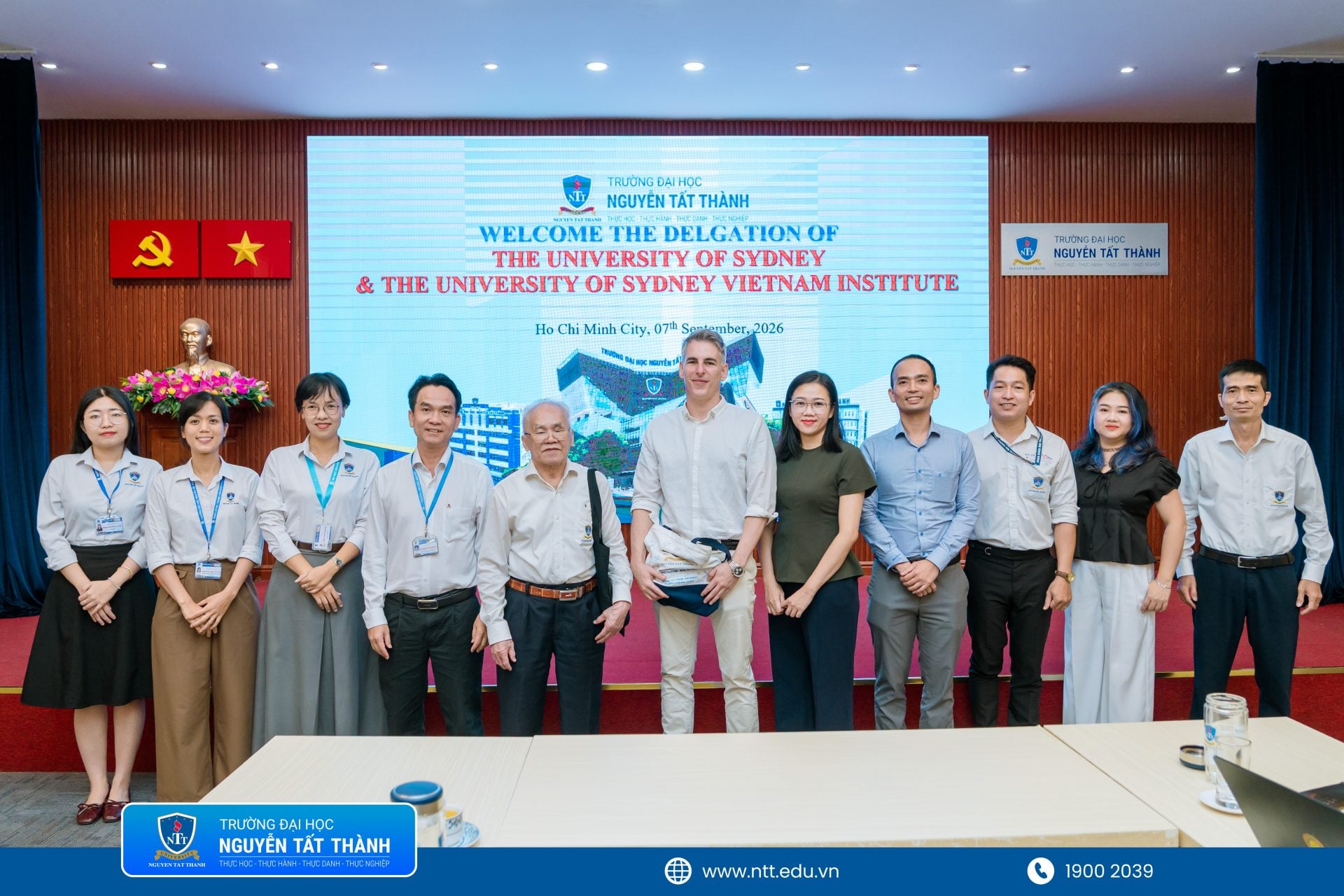
Through this working session with the University of Sydney and the Sydney Vietnam Institute, NTTU’s Faculty of Pharmacy continues to expand its international research connections, aiming to develop in-depth topics in the health sciences and create further learning and research opportunities for faculty, researchers, and students
In the next phase, both sides will continue to identify priority research directions, develop pilot projects, and seek appropriate funding sources. Matters related to personnel, funding, intellectual property, and the transfer of research results will be agreed upon as each specific program takes shape.
At the conclusion of the meeting, the delegation toured the laboratory facilities of NTTU’s Faculty of Pharmacy to learn more about the infrastructure and the feasibility of implementing the research directions discussed.
The meeting marked a positive first step in connecting NTTU’s Faculty of Pharmacy with the University of Sydney and the Sydney Vietnam Institute, laying the groundwork for further development of research, training, and international cooperation programs going forward.
Source: Faculty of Pharmacy – Nguyen Tat Thanh University
Translated by: Department of Global Engagement
Photos: Media Team