

14 international students graduate as doctors at NTTU, marking integration in medical education
NTTU – After six years of study in Vietnam, 14 international students from Laos, Cambodia and Taiwan have received their medical degrees from Nguyen Tat Thanh University (NTTU). The achievement reflects the students’ own efforts and the results of the university’s international education cooperation, from raising training quality and expanding clinical practice opportunities to implementing student support policies.
For international students, pursuing medicine in Vietnam is a demanding journey. Besides a heavy load of professional knowledge and clinical practice requirements, students must adapt to a new language, culture and living environment. These challenges were gradually overcome thanks to the students’ own perseverance and the support of NTTU. The practice system, the network of affiliated healthcare facilities and student support activities helped them build stronger professional foundations, gradually integrate, and prepare for their careers.
From international cooperation to the appeal of NTTU’s medical programs
As it develops and integrates internationally, NTTU has focused on expanding its network of cooperation with educational institutions, organizations and international partners, promoting academic exchange, connecting resources and creating more learning opportunities for students from many countries and territories. These activities contribute to a multicultural educational environment, higher training quality and a stronger capacity for integration among learners.
Health Sciences, with programs such as Medicine, Pharmacy and Nursing, is one of the fields in which international students are present at NTTU. These fields demand a high level of professional knowledge, practical skills and professional ethics, requiring students to keep updating their knowledge, practice handling clinical situations and adapt to the healthcare environment.
At the NTTU Faculty of Medicine, the curriculum is competency-based, combining basic sciences, preclinical medicine and clinical medicine with hands-on practice, scenario simulation and internships at healthcare facilities. The skills lab system lets students become familiar with professional procedures, practice basic techniques and handle simulated situations before entering the hospital environment.
In addition, a network of practice sites and training partners, including Cho Ray Hospital, Thong Nhat Hospital, Gia Dinh People’s Hospital, People’s Hospital 115, Children’s Hospital 2 and many other healthcare units, allows students to encounter real-world medical practice under the guidance of lecturers and professional staff.
Through skills practice sessions, case discussions and clinical internships, students develop professional thinking, patient communication skills, teamwork in healthcare settings and the ability to handle real-life situations. Alongside knowledge training, the Faculty of Medicine emphasizes medical ethics, a sense of responsibility and empathy, qualities that are indispensable to a physician.
Newly graduated doctor Inpeng Xaiyaphone, from Laos, is one of the international students who completed the medical program at NTTU in the 2026 graduation class. “What I value most about my years at NTTU is having access to professional knowledge closely tied to practice. The skills sessions, case discussions and hospital internships helped me understand that becoming a doctor takes not only knowledge, but also listening, understanding and responsibility toward patients. My teachers’ guidance helped me overcome difficulties step by step and become more confident in applying what I learned in practice. I know the road ahead still holds many challenges, but the foundation I gained at the Faculty of Medicine is an important asset as I continue to develop professionally.”
Alongside improving its training conditions, NTTU places importance on quality assurance. In 2025, the university’s Medicine program was accredited as meeting quality accreditation standards under Circular 04 of the Ministry of Education and Training, with 98% of criteria meeting requirements. This result recognizes efforts to refine the curriculum, develop the teaching staff and raise teaching quality, laying a foundation for the Faculty of Medicine to keep meeting the demand for trained healthcare professionals.
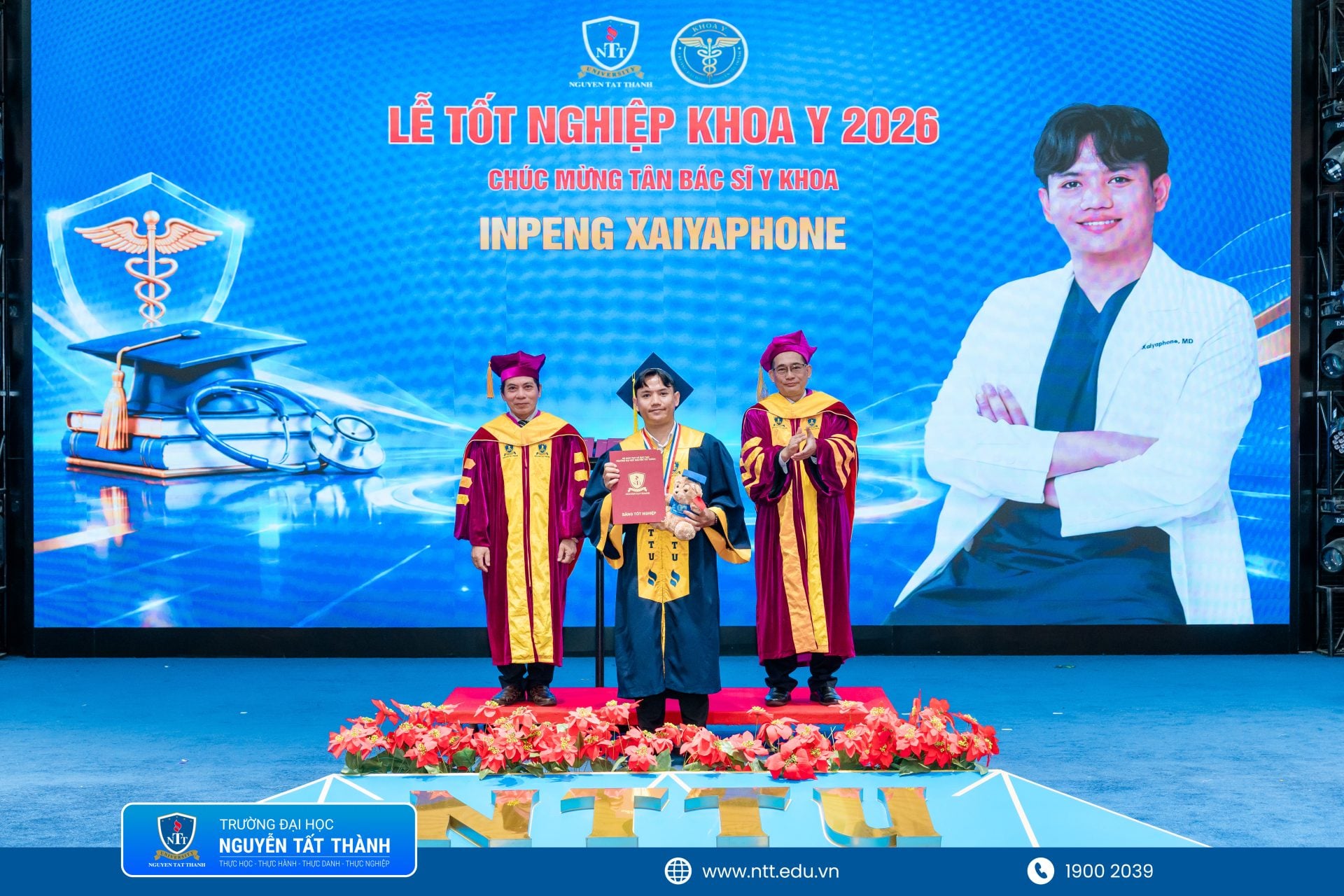
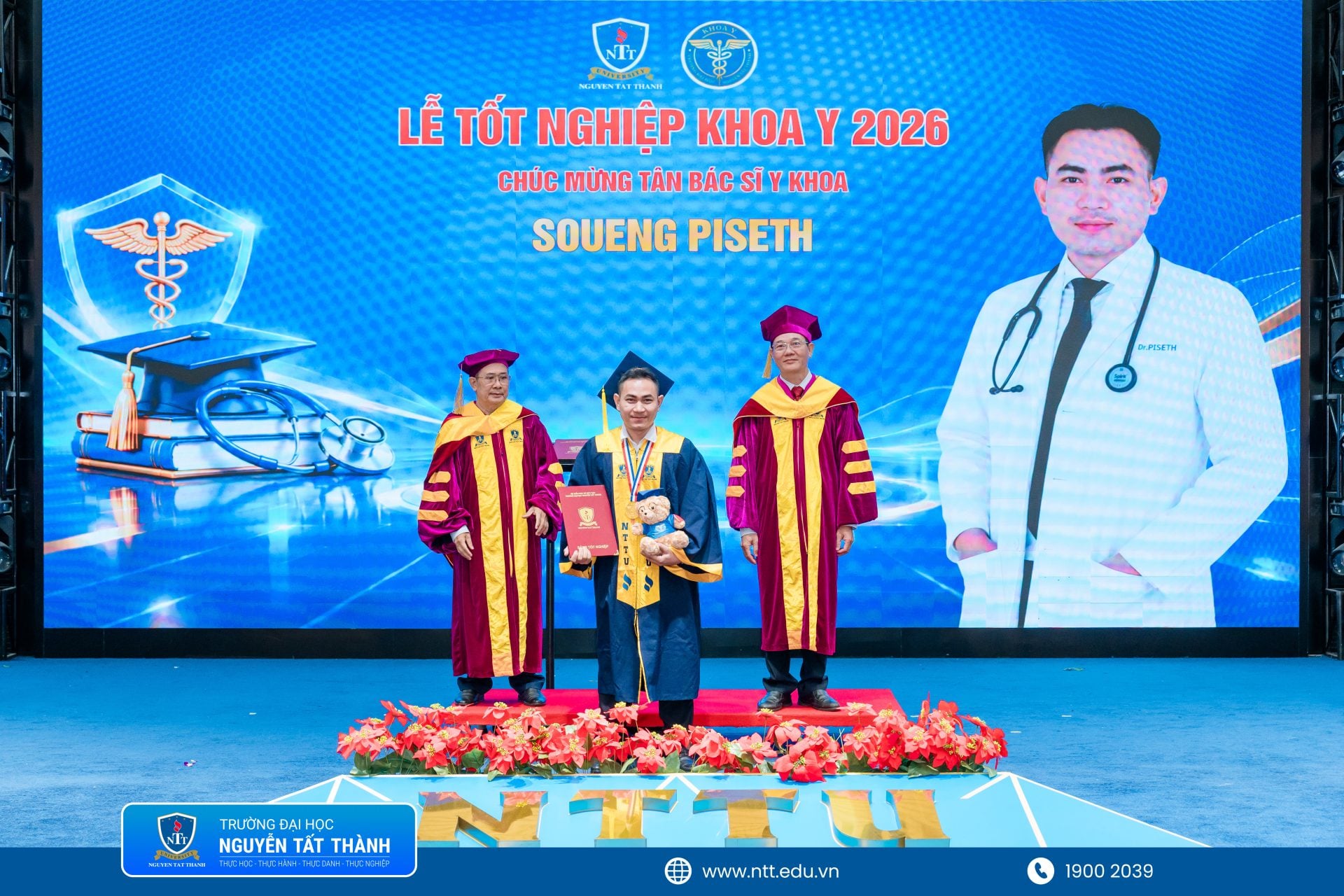
International new doctors from Laos, Cambodia and Taiwan receive their diplomas at Nguyen Tat Thanh University, marking the results of the university’s international education cooperation and healthcare workforce training.
Supporting international students and advancing sustainable educational cooperation
Beyond investing in training, NTTU provides scholarship policies, accommodation support and welfare services so that international students can settle into daily life and study with peace of mind in Vietnam.
Through cooperation programs with local authorities and foreign partners, NTTU offers many scholarships to learners who meet admission requirements. Notably, in 2025 the university awarded 30 scholarships to outstanding students in Huaphanh Province (Laos), including 15 scholarships covering 100% of tuition for the entire program and 15 covering 50% of tuition for admitted applicants. This opens access to higher education while linking training cooperation to local workforce development needs.
In addition to tuition support, the university also pays attention to housing. According to information announced in 2026, NTTU offers more than 50 free-accommodation scholarships for international students, including students from Laos and Cambodia. Together with its dormitory system and accommodation support channels, this policy helps students settle more stably and eases living-cost pressure while studying in Vietnam.
The International Student Support Center serves as the coordinating hub with faculties, offices and other units in guiding students through admission procedures, visas, residence, accommodation, and questions on academic and daily-life matters. Support is maintained throughout the program, especially in the early stage when students are getting used to the language, learning methods and new living environment.
At the Faculty of Medicine, support also takes the form of meetings and direct exchanges between university leaders, the Faculty’s leadership, lecturers and international students. At a meeting held in August 2024, the Faculty of Medicine, together with the International Student Support Center, the Student Affairs Office and the Faculty of Medicine Club, connected with students, listened to them and addressed their concerns. Issues related to study, clinical practice and daily life were discussed to help students adapt better to the particular training requirements of medicine.
Outside the classroom, NTTU organizes many cultural, sports and community activities, including sports festivals for international students, Vietnamese-language performance contests, volunteer programs, and excursions and exchanges during the traditional New Year holidays of Vietnam, Laos and Cambodia. These give students a chance to learn about local culture, introduce the customs of their home countries and build friendships in a multicultural educational environment.
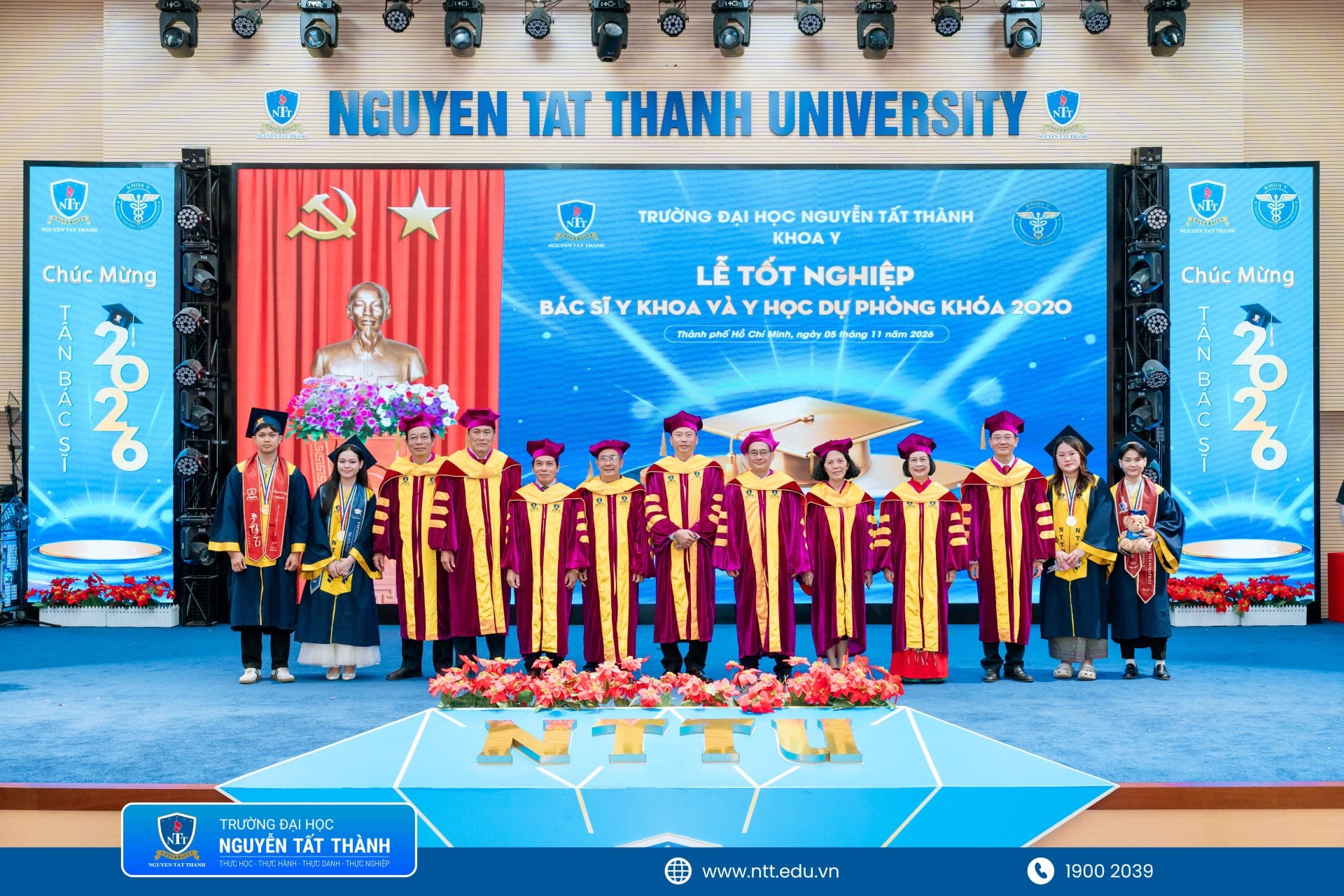
NTTU emphasizes training tied to clinical practice, giving international students a foundation to build professional competence, develop medical ethics and meet career requirements in health care.
After graduating in Medicine following six years of study in Vietnam, newly graduated doctor Bounmavene Pavina, from Laos, looks back on the time at NTTU with many memorable experiences. “On my first day in Vietnam, I worried about whether I could keep up with the curriculum and adjust to life away from my family. But year after year, thanks to my teachers’ care and my friends’ affection, I gradually came to feel that NTTU was a second home. When I received my diploma, I thought a lot about my family and the people who always believed in me and encouraged me. I hope to take the knowledge and skills I have built up here back to my homeland, keep developing my expertise and contribute to the health care of the people there.”
From those first uncertain days to completing the program, the experience of international students is measured not only by academic results but also by their adaptability, personal growth and the relationships built over many years. This is also one of the values NTTU aims for in building a multicultural, learner-centered learning environment.
Emphasizing the role of international cooperation in the university’s development strategy, Associate Professor Dr. Nguyen Kim Hong, Meritorious Teacher, President of Nguyen Tat Thanh University, said that training quality and graduates’ ability to contribute are key factors in judging the effectiveness of educational cooperation.
“For NTTU, international cooperation is not limited to joint programs or admitting students to study here. What matters more is the quality of training and what students contribute after graduation. In health sciences in particular, the university always emphasizes combining professional knowledge, practical skills and medical ethics. We hope that every international student who completes the program has a solid professional foundation, a sense of responsibility and a desire to serve the community, thereby helping advance sustainable educational cooperation between countries.”
Continuing to advance integration and improve educational quality, NTTU is focusing on developing training cooperation programs, strengthening knowledge exchange and building a learning environment that meets the needs of international students. The Faculty of Medicine and other Health Sciences programs are building on their professional strengths to enable learners to develop their professional competence and adapt to the increasingly high demands of the healthcare field.
From NTTU’s classrooms, the new international doctors continue their professional journeys, taking the knowledge, skills and experience gained in Vietnam to contribute to community health care. Their growth reflects not only the quality of NTTU’s training but also the university’s role in promoting international educational cooperation, connecting knowledge and helping develop the healthcare workforce of countries and territories across the region.
Translated by: Department of Global Engagement
Photos: Media