

QS Asia 2027: Nguyen Tat Thanh University ranks 14th in Vietnam, with research citations criteria ranking in Asia’s Top 10
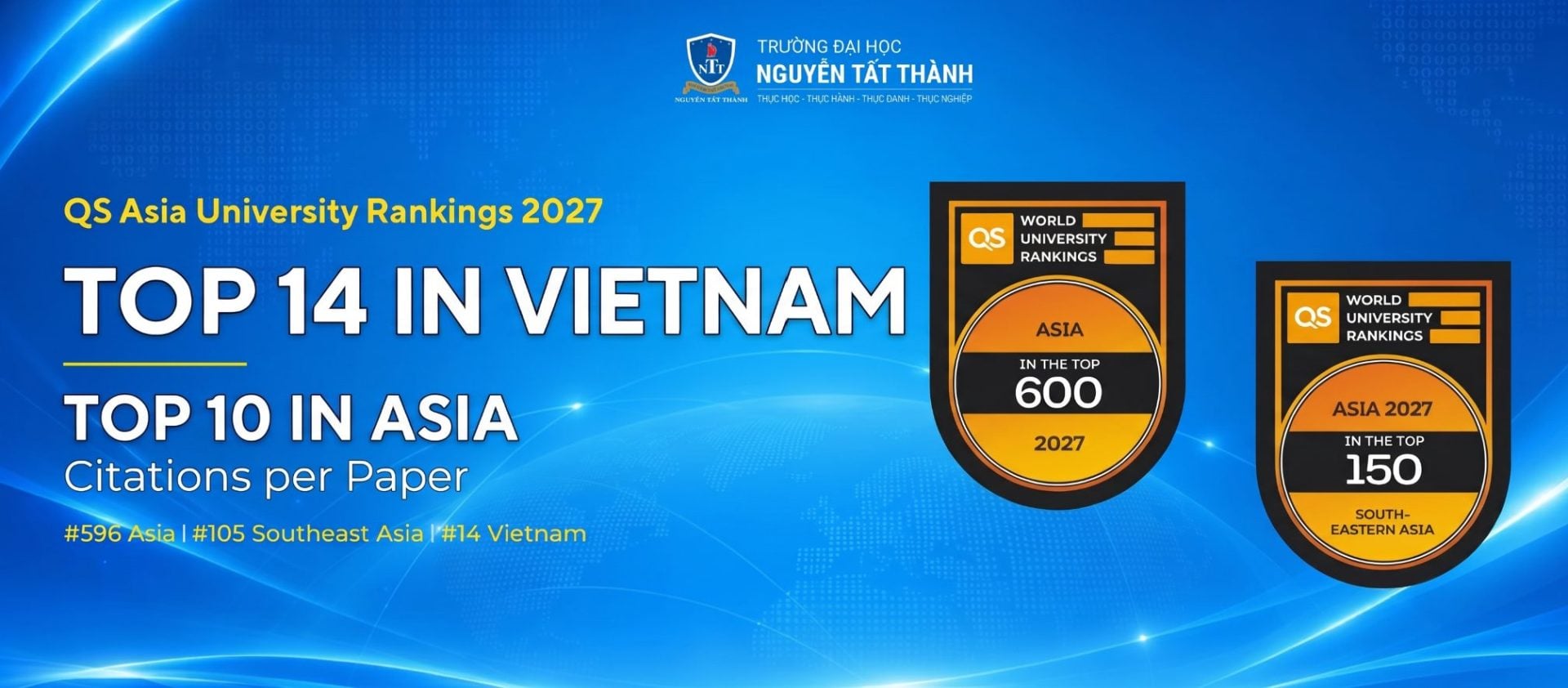
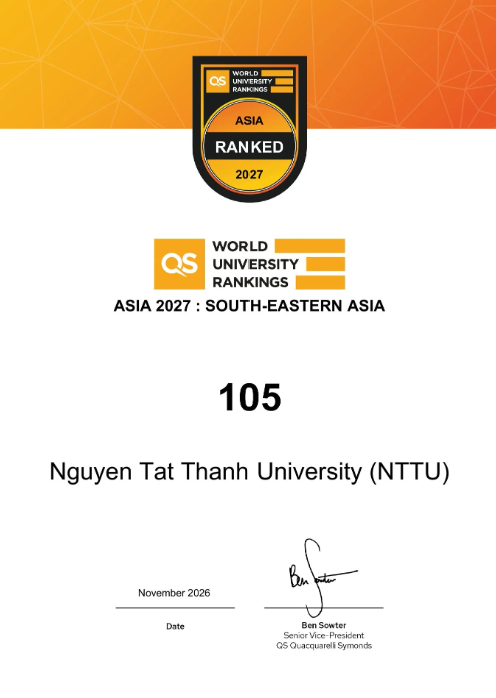
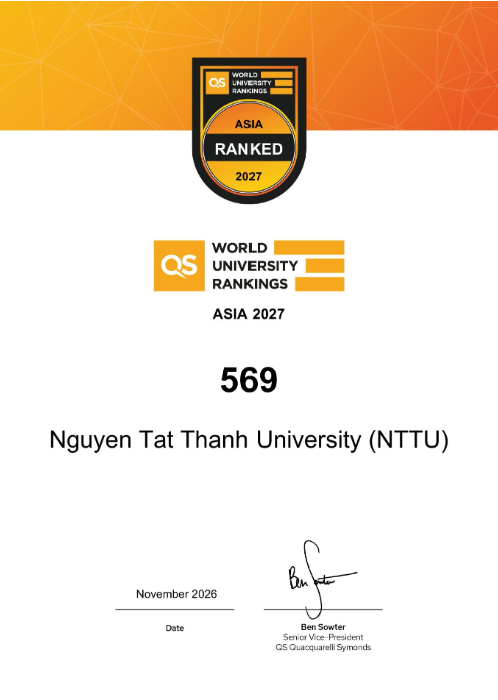
NTTU – On November 3, the higher education ranking organization Quacquarelli Symonds (QS) announced the QS Asia University Rankings 2027 (QS AUR 2027). This is the largest edition to date, covering more than 1,700 universities across 26 higher education systems. Nguyen Tat Thanh University ranked #569 in Asia, 105th in Southeast Asia, and 14th among the 33 Vietnamese higher education institutions ranked.
Research impact among Asia’s leaders
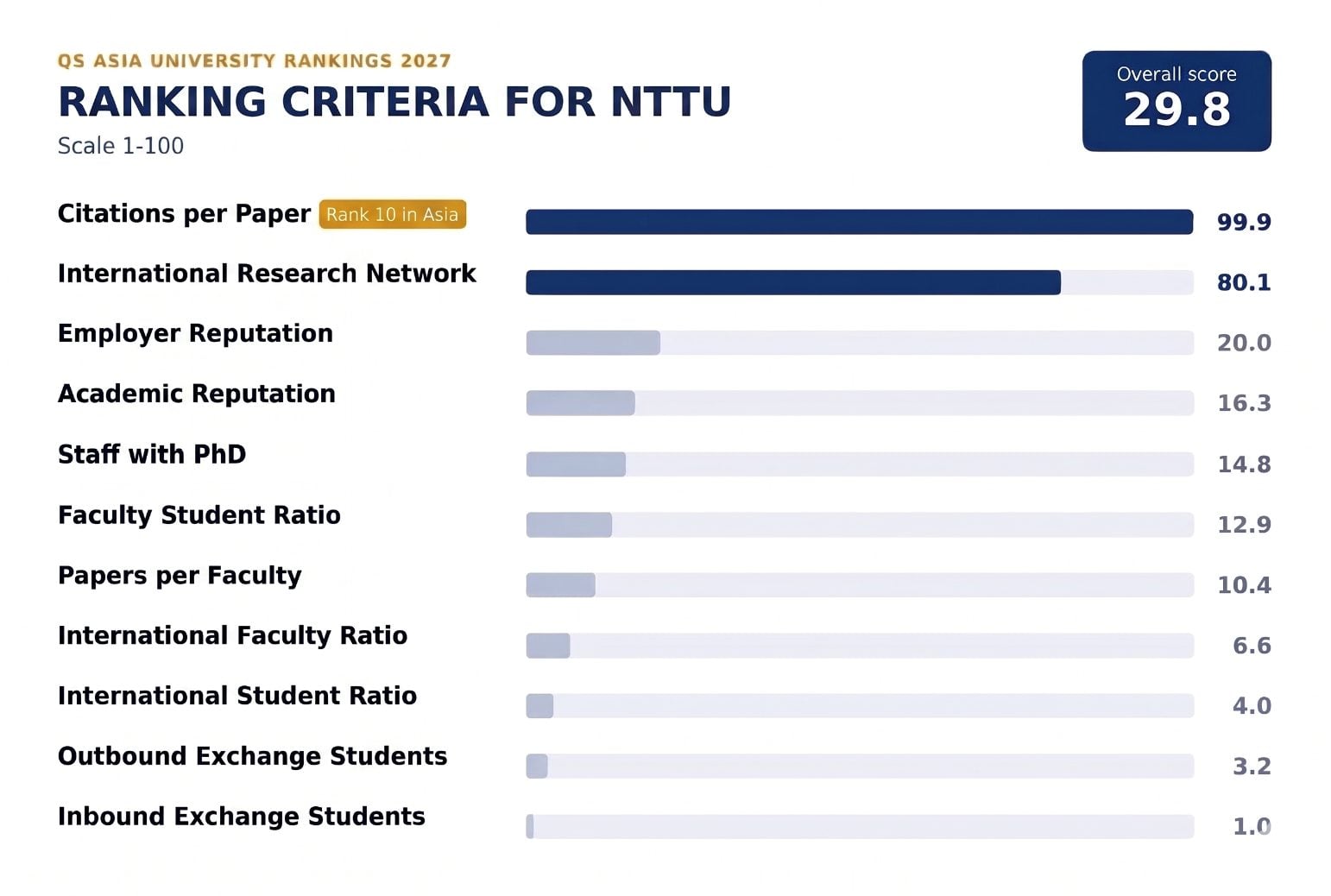
Research and Discovery is the most heavily weighted category in QS AUR 2027, accounting for 45% of the total score, and it is also the category in which Nguyen Tat Thanh University (NTTU) performed most strongly.
Notably, the Citations per Paper indicator scored 99.9 out of 100, ranking 10th in Asia (up from 14th last year) among more than 1,700 ranked institutions. In addition, the International Research Network indicator scored 80.1 out of 100, reflecting the university’s effectiveness in expanding research collaboration and academic connections with international partners. The Academic Reputation indicator also rose from 15.3 to 16.3 points.
These results show that research by NTTU has real influence in the international academic community and is being read and referenced by scientists in the region and around the world. This provides a foundation for the university to keep investing in its research groups while bringing research quality into its teaching.
Faculty strength continues to grow
In the Learning Experience category, which accounts for 15% of the total weighting, NTTU improved on both component indicators. The Staff with PhD indicator rose markedly from 9.1 to 14.8 points, pointing to positive progress in developing a highly qualified teaching staff. The Faculty–Student Ratio also rose from 12.1 to 12.9 points.
These gains reflect NTTU’s consistent, long-term investment in faculty development, in particular raising academic qualifications, research capacity and teaching quality. Alongside its emphasis on developing PhD-qualified faculty, the university is steadily refining the size and structure of its workforce to ensure it can support its enrollment and meet increasingly high expectations for the quality of higher education.
Positive progress in internationalization
Alongside strong results in research and educational quality, NTTU recorded positive progress in internationalization, with gains across several indicators of international exchange and cooperation. Specifically, International Faculty rose from 2.0 to 6.6 points, Outbound Exchange Students more than doubled from 1.5 to 3.2 points, and International Students rose from 3.5 to 4.0 points.
These increases reflect the university’s efforts to expand its network of cooperation with higher education institutions, organizations and international partners, and to promote faculty and student exchange and academic engagement. By strengthening cross-border connections, NTTU is gradually building a multicultural educational environment in which students can access advanced teaching methods and take part in academic exchange programs, joint training programs and international internships.
This is not only an opportunity for students to improve their foreign language skills and gain knowledge and practical experience, but also helps them develop a global mindset, adaptability and the ability to work in multinational environments. In this way, NTTU continues to affirm international integration as part of its development strategy, steadily improving the quality of its training and the competitiveness of its students in the regional and international labor market.
The 2027 QS AUR edition reflects increasingly intense competition among higher education institutions in the region, particularly as 198 universities appeared in the rankings for the first time. According to the statistics, among institutions that were already ranked last year, only just over 420 improved their positions, while more than 930 recorded a decline. In Vietnam, 33 institutions were ranked this year, of which 8 moved up and 8 were ranked for the first time.
Assoc. Prof. Dr. Nguyen Kim Hong – President of NTTU, said the university was also affected by the rising competition in the QS Asia University Rankings 2027. Because the ranking is built on relative comparison among institutions, a change in position depends not only on a university’s own improvement but also on the progress of other institutions in the region and on the entry of new institutions with strong results.
Assoc. Prof. Dr. Nguyen Kim Hong emphasized that the 2027 results give the university an important basis for objectively assessing what it has achieved, while identifying areas that need further improvement and investment. NTTU regards the rankings not just as a measure of standing but as a tool for benchmarking, assessment and quality improvement in higher education. In the coming period, the university will focus on three priorities:
• Close engagement with enterprises: Expand strategic cooperation with major economic groups, update learning outcomes to match real labor-market needs, and proactively set up regular feedback channels with its network of employers.
• Stronger publication and knowledge transfer: Maintain the quality and impact of its research, raise the publication productivity of its faculty, and encourage applied research that addresses socio-economic problems.
• Internationalizing academic programs: Strengthen two-way faculty and student exchange programs, attract more international experts and learners, and diversify its multinational research partners.
The QS Asia University Rankings 2027 results reflect NTTU’s efforts to raise the quality of higher education. They also provide a basis for the university to keep refining its development strategy: staying committed to a learner-centered approach, building on its strengths in scientific research, accelerating international integration and continuously improving training quality, while steadily affirming its standing in the regional and global higher education system.
Translated by: Global Engagement Department
Sources: Quality Assurance Department